Research Article - Modern Phytomorphology ( 2026) Volume 20, Issue 2
Reducing in vitro phenolic oxidation in grape explants through ascorbic acid treatment and etiolation
N. Zelenianska*, O. Gogulinska, M. Artiukh, V. Borun, M. Samofalov and M. RiabyiN. Zelenianska, National Scientific Center “Institute of Viticulture and Winemaking named after V. Ye. Tairov”, National Academy of Agrarian Sciences of Ukraine, Tairove, Odesa region, Ukraine, Email: natalyanikolaevna2019@ukr.net
Received: 27-Apr-2026, Manuscript No. mp-26-188970; Accepted: 18-Jun-2026, Pre QC No. mp-26-188970 (PQ); Editor assigned: 29-Apr-2026, Pre QC No. mp-26-188970 (PQ); Reviewed: 06-Jun-2026, QC No. mp-26-188970; Revised: 17-Jun-2026, Manuscript No. mp-26-188970 (R); Published: 22-Jun-2026, DOI: 10.5281/zenodo.20823153
Abstract
Micropropagation of grapes is a common method of propagation in grape nurseries. Phenolic oxidation of explants causes significant problems at the initial stage of introducing explants into in vitro culture. The purpose of this research was to determine the effectiveness of ascorbic acid and etiolation in reducing phenolic oxidation during culture establishment. To reduce in vitro phenolic oxidation, grape explants of ‘Arkadia’ and ‘Zagadka’ varieties were treated with the Ascorbic Acid (AA) solution for one hour before sterilization and subsequently propagated on the Murashige and Skoog (MS) growth medium with ascorbic acid, while the inoculated explants were cultivated under lighting conditions with a 12-hour photoperiod or etiolated for the first 15 days. The most favorable conditions for the proliferation of axillary buds were treatment with the ascorbic acid solution (200 mg/L) before sterilization, cultivation on a growth medium with 5 mg/L of ascorbic acid, or on a standard MS growth medium with 15-day etiolation. The polyphenol content in green tissues of the experimental explants was lower than in the control by 42.2-48.4% 30 days after their inoculation (3.20 ± 0.10, 2.86 ± 0.07 mg/g of tissue), while shoot length was 1.9-2.5 times higher than in the control (2,40 ± 0,14, 1,85 ± 0,32 cm).
Keywords
Grape explants, Micropropagation, Phenolic oxidation, Ascorbic acid, Etiolation
Introduction
Biotechnological methods are used to grow high-quality planting material in many countries with developed viticulture. The most common one is micropropagation, which involves cultivating plants under aseptic conditions in a growth medium with phytohormones. Compared to traditional methods, it provides a high propagation success rate, plant revitalization, and year-round production of planting material (Vlasov, 2015). However, when growing plantlets, common problems are slow growth, poor rooting, and phenolic oxidation (browning) of tissues. At the beginning of cultivation, during explant inoculation, a large amount of polyphenols can be released from their tissues, especially in woody plant species (Permadi, et al. 2024). Their oxidation forms toxic substances, which prevent the successful regeneration of various species, including grapes (Liu, et al. 2024).
Polyphenols are widespread plant compounds that perform important physiological and structural functions in plant growth and development (Chechuy, 2021). They are first oxidized by enzymes to quinone derivatives, and then to the pigment melanin, among others (Krishna, et al. 2008). The primary causes of phenolic oxidation are damage to plant material during explant isolation, cultivation in potentially stressful conditions, and the release of phenolic exudates from dying cells (Saengnil, et al. 2006, Shimelis, et al.2015). The manifestations of browning vary depending on the species, variety, physiological state of the plant/tissue, size, and age of explants (Ahmad, et al. 2013, Reustle and Natter, 1994).
To prevent phenolic oxidation, various methods are used, such as pre-soaking/pretreating explants in solutions of antioxidants (ascorbic, citric, and tartaric acids, L-cysteine, glutathione, mannitol, etc.) and/or adsorbents (activated carbon, polyvinylpyrrolidone, synthetic silicon compounds) or their addition to a growth medium; cultivation for some time in the dark; frequent explant subculturing. However, the effectiveness of these methods varies a lot (Amente and Chimdessa, 2021, Permadi, et al. 2024). Antioxidants, for example, interact with phenolic substances and inhibit the activity of polyphenol oxidases (Ali, et al. 2013). Studies report that ascorbic acid can prevent and stop the browning process in explants (Ko, et al. 2009). Adsorbents are not widely used because they absorb not only phenolic compounds but also other components of a growth medium. In a study of microcallus formation from grape protoplasts, activated carbon prevented culture browning, but negatively affected cultivation results (Reustle and Natter, 1994).
It is widely known that the manifestation of browning in grape callus cultures is most effectively reduced by polyvinylpyrrolidone, mannitol, and silver nitrate, while ascorbic acid, activated carbon, and citric acid were less effective (Rao, et al. 2015). Multiple treatments of grape explants with citric and ascorbic acid solutions before sterilization reduced the manifestation of phenolic oxidation (Ali, et al. 2013).
The biosynthesis of plant phenolic compounds and their oxidation are enhanced in light. Tissues cultivated in the dark often show lower levels of browning than those grown in the light (Krishna, et al. 2008). It is likely that cultivating explants without light (etiolation) reduces the activity of enzymes involved in both biosynthesis and oxidation of polyphenols. As a result, a culture survival rate increases (Zhou, et al. 2020). It has been confirmed that, apical and nodal explants derived from etiolated mother plants were successfully established under aseptic conditions (Restrepo Osorio, et al. 2026). A similar effect is achieved by inoculation of grape explants obtained from shoots grown in the dark (Sharma, et al. 1995).
For grapes, the effectiveness of the abovementioned methods varies for each variety and needs to be tested. The varieties ‘Arkadia’ and ‘Zagadka’ (Vitis vinifera L.) bred in the National Scientific Center “Institute of Viticulture and Winemaking named after V. Ye. Tairov” are table commercially valuable grape varieties, valued for their large berry size and excellent taste. The studied grape varieties have a complex interspecific origin, which determines their high adaptive properties (Herus, et al. 2025, Kovalova, et al. 2024). The purpose of this research was to determine the effectiveness of ascorbic acid and etiolation in reducing phenolic oxidation during grape culture establishment.
Materials and Methods
This research was conducted in the laboratory of in vitro grape culture in the Department of Nursery, Propagation and Biotechnology of Grapes of the National Scientific Center “Institute of Viticulture and Winemaking named after V. Ye. Tairov”. ‘Arkadia’ and ‘Zagadka’ table grape varieties (Vitis vinifera L.) bred in the National Scientific Center “Institute of Viticulture and Winemaking named after V. Ye. Tairov” were used in this study in 2024-2025.
Establishing the in vitro culture and plantlet cultivation were carried out according to the generally accepted method (Vlasov, 2015). The prepared cuttings were pre-grown in a culture room, and explants were selected from the obtained shoots (fragments of a stem with axillary buds). Before sterilization, bud scales were removed, and explants were sequentially treated with “Lizoformin” 2% (15 min), 2 g/L quinazole (20 min), and ethyl alcohol 96% (2-3 s) solutions. After each treatment, explants were washed with sterile distilled water. After that, they were inoculated in a laminar flow box on the standard Murashige and Skoog (MS) growth medium supplemented with 0.4 mg/L of 6-benzylaminopurine with a medium pH of 5.7-5.8. To prevent phenolic oxidation, various methods were combined: Cleaned of scales, explants were treated with the 200 mg/L ascorbic acid solution for 1 hour before sterilization, or inoculated in a growth medium with 3-5 mg/L of ascorbic acid, or kept in the dark for 15 days for explant etiolation, and then cultivated in the light. The experimental design is presented in Tab. 1.
| Variant | Explant illumination at a 12-h photoperiod (+)/explant etiolation during first 15 days (-) (factor A) | Additional treatment of explants with AA solutions before sterilization (factor B) | AA in a growth medium (factor C) |
|---|---|---|---|
| Variant 1 (control) | + | - | - |
| Variant 2 | + | - | 3 mg/L of AA |
| Variant 3 | + | - | 5 mg/L of AA |
| Variant 4 | + | 200 mg/L of AA | - |
| Variant 5 | + | 200 mg/L of AA | 5 mg/L of AA |
| Variant 6 | - | - | - |
| Variant 7 | - | - | 3 mg/L of AA |
| Variant 8 | - | - | 5 mg/L of AA |
| Variant 9 | - | 200 mg/L of AA | - |
| Variant 10 | - | 200 mg/L of AA | 5 mg/L of AA |
Note: AA: Ascorbic Acid.
Table 1. Cultivation conditions and composition of the growth medium for explant inoculation.
The explants were incubated in a culture room at a temperature of 25-27°C, 60-70% air humidity, and a 12-h photoperiod at 2000-2500 lux light intensity, unless otherwise indicated. The study comprised 10 different treatments. All experiments were performed in three independent replicates conducted at different times. For each treatment, a minimum of 15 explants were cultured individually per run (one explant per tube). This resulted in a total sample size of n ≥ 45 explants per treatment n ≥ 450 explants in total for the entire experiment) used for statistical analysis. 7, 15, and 30 days after inoculating, the survival rate, proliferation and rhizogenesis of explants (as % out of all inoculated explants) were recorded. After 30 and 60 days, the main characteristics of growth and development of plantlets were measured (shoot length, cm; number of leaves and roots, pcs.). After 15, 30, and 60 days, the content of polyphenolic compounds (mg/g of tissue) in the green tissues of grape explants was determined spectrophotometrically (λ=746 nm) using the Folin-Ciocalteu method, adapted from Singleton and Rossi, 1965. Fresh tissue samples (0.5 g) were thoroughly ground and extracted with 25 mL of hot distilled water (60°C) for 30 min. To prepare the working sample, a 2 ml of the crude aqueous extract was diluted to a final volume of 50 mL with distilled water. Subsequently, a 5 ml aliquot of this diluted solution was mixed with 2 ml of Folin- Ciocalteu reagent and 10 ml of sodium carbonate solution. The mixture was incubated to develop the characteristic blue color for 40 min, and the absorbance was measured. Quantification was performed using a calibration curve established with Gallic Acid (GA) as the standard. Taking into account the initial sample weight and the multi-step dilution factors, the final results were expressed as milligrams of Gallic Acid Equivalents per gram of Fresh Weight (mg GAE/g FW).
The data were statistically processed using Jamovi 2.6.44 and Microsoft Excel programs. Since survival and proliferation rates were expressed as percentages (%), they were subjected to an arcsine square-root transformation prior to parametric testing to satisfy the assumptions of normality (Shapiro-Wilk test) and homogeneity of variances (Levene’s test). To evaluate the main effects of the three investigated variables and their interactions, a Three-Way Analysis of Variance (Three-Way ANOVA) was performed, accounting for all main effects, as well as two-way and three-way interaction effects. Significant differences among specific treatment combinations were identified using Tukey’s Honestly Significant Difference (HSD) post hoc test. The threshold for statistical significance across all analyses was strictly set at p<0.01. For graphical presentation, data were back-transformed to original percentages.
Results and Discussion
The survival rate and proliferation of explants are the most important indicators of their viability during the culture establishment. The survival rate decreases over time for various reasons: Phenolic oxidation in tissues, bacterial and fungal infection, or bud damage. In a previous study, we found that at the stage of introduction of initial explants of grapes into in vitro culture, the use of etiolation for 15 days had a positive effect on proliferation of axillary buds and further development of explants (Zelenyanska, et al. 2024).
On the 7th day after inoculation, the survival rate of ‘Arkadia’ explants was high in all variants (95-100% of all inoculated explants). However, already on the 15th day, it differed among the variants. Overall, 94.4-100.0% of explants survived, with the exception of variant 10, in which 78.5% of explants remained. On the 30th day, the best survival rate was observed in variants 2, 3, 5, and 6-9 (81.7-96.0%) (Fig. 1).
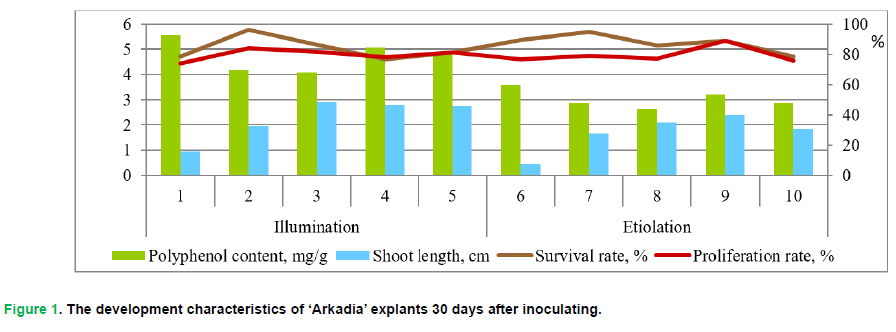
Figure 1: The development characteristics of ‘Arkadia’ explants 30 days after inoculating.
However, bud proliferation was not observed in all seemingly viable explants. In variants with illumination, bud proliferation began on the 3rd-5th day, and in variants with etiolation, it started on the 5th-7th day. On the 30th day, bud proliferation was observed in 66.7-88.9% of explants. The highest proliferation rate (81.3-88.9%) was in variants 2, 3, 5, and 9. It should be noted that in these variants, only 5.0-7.8% of explants showed signs of phenolic oxidation, while in other variants and the control, that number reached up to 20%.
In the ‘Zagadka’ variety, a similar trend towards increased survival and proliferation rates was observed in variants 2-4 and 9, in particular, in the last three variants (85.0-92.5% and 76.4-80.0% for survival and proliferation rates, respectively).
The antioxidant mechanism of ascorbic acid is well known, in in vitro culture it acts as a direct chemical reducing agent and as an inhibitor of oxidative enzymes. It could reduce the formed toxic quinone back to the original safe substrate, and at low concentrations it acts as a competitive inhibitor of the enzyme (Ali, et al. 2015, Amente and Chimdessa, 2021). Unlike ascorbic acid, which fights the effects of oxidation, etiolation acts in advance-it prevents the plant from starting the process of synthesis and activation of phenols. Etiolation turns off light-dependent oxidation genes, reduces phenol reserves in cells and makes grape tissues more physiologically resistant to in vitro stress (Sharma, 1995). Normally, a plant uses phenolic compounds (e.g., tannins and lignin) to protect against solar ultraviolet radiation and strengthen cell walls. Under etiolation, the plant redirects all resources from secondary metabolism (phenol synthesis) to primary metabolism-rapid elongation of the shoot in search of light (Permadi, et al. 2024).
In ‘Zagadka’, a decrease in polyphenol content was also observed in etiolated explants and the ones treated with ascorbic acid, especially in variants 3, 4, 9, 10 (up to 3.22-3.65 mg/g).
30 days after inoculation, growth characteristics of explants were measured as well (Fig. 1). In ‘Arkadia’, the longest shoots developed in variants 3-5 and 10 (2.4-2.9 cm). Variants 3-5 and 8-10 had the highest number of leaves (3.0-3.2 leaves per shoot). In ‘Zagadka’, the longest shoots developed in etiolated explants of variants 9 and 10 (3.0-3.3 cm) with 2.7-3.0 leaves per shoot.
At the last stage of this research, using the three-way analysis of variance, the influence of the following factors was assessed: Illumination/etiolation for 15 days (factor A), standard sterilization/treatment with antioxidant ascorbic acid (factor B) and cultivation on a standard growth medium MS/MS medium with ascorbic acid (factor C), proliferation of grape explants, polyphenol content and shoot length on the 30th day after inoculating (Tab. 2). In most cases, the results showed a statistically significant interaction between these three factors. Regarding the use of ascorbic acid, it was found that factors A and B (19.5% and 12.0% of the variance is caused by its influence) and the interaction between factors A and C (34.2% of the variance) had a strong influence on explant survival rate. These factors had an even greater impact on explant proliferation (55.6% of the influence is caused by their interaction), i.e., the impact of factor A was completely dependent on the level of factor C. Regarding polyphenol content, 77.5% of the variability is caused by the impact of factor A. The impact of factor C and the interaction of factors B and C are significant as well. Factors B and C, as well as their interaction, had the greatest impact on shoot length by 36.6%, 29.7%, and 19.8%, respectively. The three-way factor interaction is not statistically significant for any of these characteristics.
| Source of variation | df | Survival rate (%) | Proliferation rate (%) | Polyphenol content (mg/g) | Shoot length (cm) | ||||
|---|---|---|---|---|---|---|---|---|---|
| F | ŋ2, % | F | ŋ2, % | F | ŋ2, % | F | ŋ2, % | ||
| Comprehensive model | 7 | 6,96* | 7,83* | 121,24* | 99,50* | ||||
| Illumination (A) | 1 | 12,59 | 19,5 | 3,98 | 5,6 | 670,47* | 77,5 | 50,36* | 7,1 |
| Treatment with the AA solution (B) | 1 | 7,77 | 12,0 | 0,32 | 0,4 | 0,04 | 0,0 | 261,03* | 36,6 |
| MS+AA growth medium (C) | 1 | 1,37 | 2,1 | 1,37 | 1,9 | 130,52* | 15,1 | 211,58* | 29,7 |
| Interaction A × B | 1 | 0,76 | 1,2 | 2,96 | 4,2 | 8,18 | 0,9 | 22,38* | 3,1 |
| Interaction A × C | 1 | 22,16* | 34,2 | 39,36* | 55,6 | 1,03 | 0,1 | 0,65 | 0,1 |
| Interaction B × C | 1 | 0,78 | 1,2 | 0,64 | 0,9 | 38,19* | 4,4 | 141,09* | 19,8 |
| Interaction A × B × C | 1 | 3,28 | 5,1 | 6,18 | 8,7 | 0,26 | 0,0 | 9,43 | 1,3 |
Note: *: The effect is statistically significant when p<0.01; AA: Ascorbic Acid.
Table 2. Results of the variance analysis of influence on the development characteristics of ‘Arkadia’ explants.
Thus, the most favorable conditions for explant survival and proliferation rates are the correct combination of the light regime and the composition of the growth medium (supplemented with ascorbic acid). The polyphenol content in tissues and shoot length were most influenced by light regime and composition of a growth medium. Presumably, etiolation blocked the light-dependent synthesis of polyphenols, and the double application of ascorbic acid (during treatment and cultivation) neutralized the oxidants released via tissue damage (Amente and Chimdessa, 2021). Due to this, the 6-Benzylaminopurine (BAP) phytohormone in the medium stimulated the explant proliferation and the growth of shoots.
To determine the best combination of factors, a posteriori comparison was conducted for the “difference between means” characteristic. The largest statistically significant difference for the survival rate according to Tukey’s range test was 13.17 (p<0.01) in variant 10, which was etiolated for 15 days, treated with the ascorbic acid solution before sterilization, and cultivated on a growth medium with 5 mg/L of ascorbic acid. And for the proliferation rate, the maximum difference was -17.40 in variant 9 (etiolation for 15 days, treatment with the ascorbic acid solution before sterilization, and cultivation on a standard growth medium). The largest significant difference between means for the shoot length (-2.40) was also in variant 10. Variant 9 was the best combination by the “polyphenol content” variable, with p<0.01, and the “difference between means” was 2.57.
Conclusion
The most favorable conditions for axillary bud proliferation of ‘Arkadia’ and ‘Zagadka’ grape varieties were treatment with the ascorbic acid solution (200 mg/L) before sterilization, cultivation on a growth medium with 5 mg/L of ascorbic acid, or on a standard Murashige and Skoog (MS) growth medium with etiolation for 15 days. The content of polyphenolic compounds in green tissues of these variants was lower than in the control, 15-30 days after inoculation (by 42.2-48.4%), and shoot length exceeded the control by 1.9-2.5 times. Optimized sterilization protocols and introduction of explants into in vitro culture can be used for micropropagation of these grape varieties.
Acknowledgement
The authors express their gratitude to the staff of the Department of Grape Breeding, Genetics and Ampelography of the National Scientific Center “Institute of Viticulture and Winemaking named after V. Ye. Tairov” for providing samples and their assistance in conducting this research.
References
- Ahmad I, Hussian T, Ashraf I, Nefees M, Marayam MR, Iqbal M. (2013). Lethal effects of secondary metabolites on plant tissue culture. Am Euras J Agric Environ Sci. 13:539-547.
- Ali HM, El-Gizawy AM, El-Bassiouny RE, Saleh MA. (2015). Browning inhibition mechanisms by cysteine, ascorbic acid and citric acid, and identifying PPO-catechol-cysteine reaction products. J Food Sci Technol. 52:3651-3659.
- Amente G, Chimdessa E. (2021). Control of browning in plant tissue culture: A review. J Sci Agric. 5:67-71.
- Chechuy OF. (2021). Plant biochemistry. KhNAU, Kharkiv. (In Ukrainian).
- Herus L, Kovalova I, Ishchenko I, Fedorenko M, Artiukh M. (2025). Ecological plasticity and stability of grape varieties as an indicator of economic efficiency of their cultivation. Modern Phytomorphol. 19:227-233.
- Khosroushahi AY, Naderi-Manesh H, Simonsen HT. (2011). Effect of antioxidants and carbohydrates in callus cultures of Taxus brevifolia: evaluation of browning, callus growth, total phenolics and paclitaxel production. BioImpacts. 1:37-45.
[Crossref] [Google Scholar] [PubMed]
- Ko WH, Su CC, Chen CL, Chao CP. (2009). Control of lethal browning of tissue culture plantlets of Cavendish banana cv. Formosana with ascorbic acid. Plant Cell Tiss Organ Cult. 96:137-141.
- Kovalova IA, Gerus LV, Salii OV, Fedorenko MG, Skrypnyk VV. (2024). Improvement of the grape variety Zagadka by the method of clonal selection. Agrarian science: State and prospects for development: Collection of materials of the IV International scientific and practical conference (Odessa, November 28-29, 2024). Odessa State University of Agriculture, Faculty of Agrobiotechnology. 324-327. (In Ukrainian)
- Krishna H, Sairam RK, Singh SK, Patel VB, Sharma RR, Grover M, Nain L, Sachdev A. (2008). Mango explants browning: Effect of ontogenic age, mycorrhization and pre-treatments. Sci Hortic. 118:132-138.
- Liu C, Fan H, Zhang J, Wu J, Zhou M. (2024). Combating browning: Mechanisms and management strategies in in vitro culture of economic woody plants. For Res. 4:e032.
[Crossref] [Google Scholar] [PubMed]
- Permadi N, Akbari SI, Prismantoro D, Indriyani NN, Nurzaman M. (2024). Traditional and next-generation methods for browning control in plant tissue culture: current insights and future directions. Curr Plant Biol. 38:100339.
- Rao H, Shao Z, Liu H, Wu Y, Qian P. (2015). Effect of browning inhibitors on callus subculture of phenolic compounds, enzyme and gene expression of grape. J Plant Physiol. 51:1322-1330.
- Reustle G, Natter I. (1994). Effect of polyvinylpyrrolidone and activated charcoal on formation of microcallus from grapevine protoplasts (Vitis sp.)., 33:117-121.
- Restrepo-Osorio C, Gil-Correal A, Saavedra-Porras S, Cárdenas-Ortiz L, Chamorro-Gutiérrez L, Villanueva-Mejía D. (2026). An efficient protocol for clonal propagation of avocado (Persea americana Mill.) rootstocks via etiolation-enhanced micropropagation. Plant Cell Tiss Organ Cult. 164:96.
- Saengnil K, Lueangprasert K, Uthaibutra J. (2006). Control of enzymatic browning of harvested ‘hong huay’ litchi fruit with hot water and oxalic acid dips. Science Asia. 32:345-350.
- Sharma HC, Sharma RR, Goswami AM. (1995). Effect of etiolation on polyphenol oxidase activity in shoots of grape and its subsequent in vitro survival. Indian J Hortic. 52:104-107.
- Shimelis D, Bantte K, Feyissa T. (2015). Effects of polyvinyl pyrrolidone and activated charcoal to control effect of phenolic oxidation on in vitro culture establishment stage of micropropagation of sugarcane (Saccharum ocinarum L.). Adv Crop Sci Technol. 3:184.
- Singleton VL, Rossi JA. (1965). Colorimetry of total phenolics with phosphomolybdic-phosphotungstic acid reagents. Am J Enol Vitic. 16:144-158.
- Vlasov VV. (ed.) (2015). System of certified grape nursery of Ukraine: Monograph. Agrarna Nauka, KiÑv. (In Ukrainian).
- Zelenyanska N, Gogulinska Ð, Artiukh Ð, Borun V. (2024). Application of etiolation of grape explantsin vitro culture. Sci Rep Natl Univ Life Env Sci Ukraine. 20.
- Zhou Q, Gao B, Li W-F, Mao J, Yang S-J, Li W, Ma Z-H, Zhao X, Chen B-H. (2020). Effects of exogenous growth regulators and bud picking on grafting of grapevine hard branches. Sci Hortic. 264:109-186.