Research Article - Modern Phytomorphology ( 2026) Volume 20, Issue 1
Mitigating the drought and salt stresses for sustainable tomato crop production by using biochar
Muhammad Ibraheem1, Zeeshan Mutahir1, Adnan Akhter2, Zafar Iqbal3 and Muhammad Khurshid1*2Department of Plant Pathology, University of the Punjab, Lahore, Pakistan
3Central Laboratories, King Faisal University, Al-Ahsa, Saudi Arabia
Muhammad Khurshid, School of Biochemistry and Biotechnology, University of the Punjab, Lahore, Pakistan, Email: khurshid.ibb@pu.edu.pk
Received: 21-Jan-2026, Manuscript No. mp-26-182928; Accepted: 18-Feb-2026, Pre QC No. mp-26-182928 (PQ); Editor assigned: 23-Jan-2026, Pre QC No. mp-26-182928 (PQ); Reviewed: 06-Feb-2026, QC No. mp-26-182928; Revised: 13-Feb-2026, Manuscript No. mp-26-182928 (R); Published: 20-Feb-2026 , DOI: 10.5281/zenodo.18846799
Abstract
Abiotic stresses such as drought and salinity remain among the formidable challenges to global crop productivity, threatening food security under a changing climate. This study investigated the biochar weathering and biochar role in mitigating abiotic stresses in tomato. Scanning electron microscopy and elemental analysis of biochar after six months of soil incorporation revealed changes in its structure and composition. Pot experiment showed that 5% (v/v) biochar application mitigated biomass loss, limiting biomass reduction to 35% under drought (compared to 50% reduction in the no biochar control). Under salinity stress, plants grown with 5% biochar amendments showed 13% more biomass as compared to no biochar control. Moderate biochar application (5%) consistently outperformed to higher rate (10%) in promoting growth and stress tolerance.
Keywords
Biochar characterization, Biochar weathering, Drought mitigation, Salinity mitigation, Sustainable agronomyIntroduction
Biochar is a carbon-rich porous material produced through the pyrolysis of organic matter. It has gained significant attention due to its potential benefits for soil and plant growth in a sustainable manner (Wang, et al. 2023). During pyrolysis, carbon in feedstock becomes stable and remains in the soil for centuries. This carbon sequestration helps in countering CO2 emission and climate change mitigation in the long run (Liu, et al. 2015). Accumulation of Soil Organic Matter (SOM) further supports microbial activities and mineral retention in the rhizosphere. So, biochar positively influences the environment by enhancing SOM, reducing greenhouse gases, and regulating microbial growth which speeds up nutrient cycling (Irfan and Mirara, 2024, Joseph, et al. 2021). Stable organo-mineral complexes and rhizo-deposits on biochar surface contribute toward soil fertility in sustainable way (Li et al., 2020). Biochar application in agriculture can solve the issues of food security, climate change, decreasing fertility, and reducing crop performance. On average biochar may increase plant yield by 10%-42%, depending upon the soil, biochar and plant type (Rosada, 2024). Many advanced countries including China, Europe, Australia, and North America are utilizing biochar in agriculture (Robb, et al. 2020).
Physical properties of biochar effects the soil fertility by altering soil surface area, porosity, pore size, density, texture, structure (Blanco-Canqui, 2017). Biochar with high pH reduces the soil cations and improves nutrient mobility and their supply to the plants (Gul, et al. 2015). Biochar also reduces heavy metal toxicity in soils and plant tissue (Rawat, et al. 2019). Mycorrhizal association is enhanced with the application of biochar, which leads to increased nutrient supply and plant growth (Solaiman, et al. 2010).
Biochar resists decomposition due to thermochemical reactions that transform biomass into aromatic compounds. A small portion of biochar NPK get dissolved and available for plant utilization (Ippolito, et al. 2020). Biochar also undergoes weathering with time due to physiochemical reactions in the soil, so the associated responses also evolve (Joseph, et al. 2021, Gul, et al. 2015).
Tomato (Solanum lycopersicum) holds significant economic importance (Viuda-Martos, et al. 2014). Drought and salinity are significant abiotic stresses impacting tomato plants, affecting growth and yield (Tamreihao, et al. 2023).
Drought, a consequence of climate change and human activity, is a major factor affecting agricultural growth and yield (Osmolovskaya, et al. 2018). Similarly, about 20% of cultivated and 33% of irrigated agricultural lands face high salinity in the world (Shrivastava and Kumar, 2015). It is estimated that soil salinization is reducing 1.5 million hectares of farmland annually (FAOSTAT, 2023, Bina and Bostani, 2017). Biochar, a carbon negative soil amendment, is known to improve soil quality, aiding plant growth, resistance to environmental stresses and lowers the oxidative stress by improving soil texture, water-holding ability, pH buffering capacity and redox potential (Eh) (Husson, et al. 2018). The improved plant nutrition and metabolism protect against abiotic stress resistance (Elad, et al. 2011).
This study addresses the impact of weathering on biochar’s physiochemical properties. We documented the changes associated with biochar weathering to understand its long-term utility. Besides this, we also assessed the biochar role in improving plant growth and mitigating drought and salinity stress.
Materials and Methods
Physiochemical characterization of soil and biochar
Soil samples were finely ground and mixed with distilled water in 1:10 (w/v). After overnight equilibration, the pH and EC were measured by immersing the respective probe. The mean with standard error was reported (Rajkovich, et al. 2012). Organic matter was estimated using Walkley method (Walkley, 1947). Potassium was measured using flame photometer as described by (Richards, 1954). The Olsen method was employed to determine phosphorus content (Olsen, 1954). CHNS (carbon, hydrogen, nitrogen, sulphur) analysis was performed using the Vario MICRO cube elemental analyzer (elementar) (EA, 2017).
Biochar weathering analysis
In order to assess the weathering of biochar in soil, Scanning Electron Microscopy (SEM) along with Energy-Dispersive X-ray-Spectroscopy (EDS) were utilized. Leaf-derived biochar and stem-derived biochar samples from six-month-old pots were recovered and parallel unused biochar samples (both leaf and stem-derived) were compared with SEM-EDS for morphological and elemental analysis.
Impact of biochar on plant growth and stress mitigation
The plants were cultivated in four distinct soil amendments: “Soil (S),” the plain soil with no additional amendments; “SCom” containing 20% (v/v) compost without biochar; “SCom+5B” with 5% (v/v) biochar; and “SCom+10B” including 10% (v/v) biochar. Solanum lycopersicum cv. Rio Grande seeds were surface-sterilized with 2% sodium hypochlorite (NaOCl) and sown in the seedling tray with a 16 h light/8 h dark photoperiod at a temperature of 24°C. Four-week-old seedlings were transplanted in the pots in the glasshouse with 16h light/8h dark photoperiod and the temperature range of 25°C to 30°C. All pots were irrigated with 350 ml water every second day, except where mentioned.
Drought treatment was induced as per previously reported by Akhtar, et al. 2014. Salinity stress was induced by irrigating the plants with a 350 ml NaCl solution the concentration of NaCl gradually increased from 50 mM (6 dS/m) to 200 mM (21.9 dS/m). The plants were harvested on the 40th day after transplantation while displaying stress symptoms (Zhang, et al. 2018).
Statistical analysis
For statistical analysis, GraphPad Prism software version 8.1 was employed. One-way Analysis Of Variance (ANOVA) was performed to assess the overall differences among treatment groups. Post hoc Tukey’s multiple comparison tests (Tukey’s HSD) were applied to determine specific significant differences between treatment means. The significance level was set at p<0.05. Distinct alphabets were used on bars of the graphs to show statistically significant differences.
Results
Physiochemical characterization of soil
Biochar density was 145 g/dm³ with 40% carbon content. To assess the suitability of biochar for soil and plants, and to estimate its stability as a soil amendment, the physiochemical characterization of biochar was conducted. Biochar exhibited an alkaline pH of 9.5 ± 0.2, accompanied by an electrical conductivity of 22.5 ± 2.3 dS/m, indicating its ionic properties. The biochar was rich in organic matter (71.7% ± 3.6) although most of this was recalcitrant. A significant amount of phosphorus (108.3 ppm) and a high potassium content of 920.6 ppm show the nutritional significance for plant.
The biochar amended soil was selected from the pots 60-days post-transplantation. It was found that 5 and 10% biochar application increased the soil pH, Cation Exchange Capacity (CEC) potassium content and organic matter and carbon content. Pure soil (S) exhibited an EC of 2.7 dS/m, while soil with 20% compost (SCom) showed a higher EC of 5.4 dS/m compared to soil (S). The addition of 5% and 10% biochar to the soil-compost mix (SCom) resulted in a slight decrease in Electrical Conductivity (EC). The soil (S) had a pH of 7.2, whereas the SCom+5B and SCom+10B amendments showed higher pH levels of 7.5 and 7.7, respectively. The organic matter content in the 5% and 10% biochar amendments was 6.1% and 6.6%, respectively.
Biochar characterization
Elemental analysis of the biochar was conducted using a CHNS elemental analyser (Vario MICRO). The analysis showed that biochar is composed of 1.91% nitrogen, 39.46% carbon, 2.461% hydrogen, and 0.320% sulphur. The Carbon-Nitrogen (C/N) ratio was 20.6, Carbon-Hydrogen (C/H) ratio was 16.03, Nitrogen-Carbon (N/C) ratio was 0.048, and hydrogen-carbon (H/C) ratio was 0.06. These ratios indicate the biochar’s stability and the efficiency of the pyrolysis process.
The elemental composition analysis of leaf-derived and stem-derived biochar was conducted separately using Energy-Dispersive X-ray Spectrometry (EDS). EDS spectrum of the leaf biochar sample showed 55.13% carbon content, 38.96% oxygen, 4.6% aluminium, and 2.63% magnesium. The average composition of wood biochar was determined to be 77.8% carbon, 20.73% oxygen, 0.96% calcium, and 0.42% magnesium. Leaf biochar exhibited a lower carbon content (55%) compared to stem biochar (77.9%). Stem biochar showed more stability (O:C ratio of 0.26) than leaf biochar (O:C ratio of 0.70).
Biochar weathering in soil
Biochar samples recovered from 6 months old soil pots were examined for their weathering using SEM-EDS analysis. Biochar without mixing in the soil behaved like “pre-weathering biochar”. The leaf-derived biochar exhibited well-defined leaf morphology with distinct pore like features (Fig. 1). In the post-weathering state, the biochar surface displayed a roughened texture and EDS analysis confirmed the presence of new elements along with the dissolution of carbon compounds.
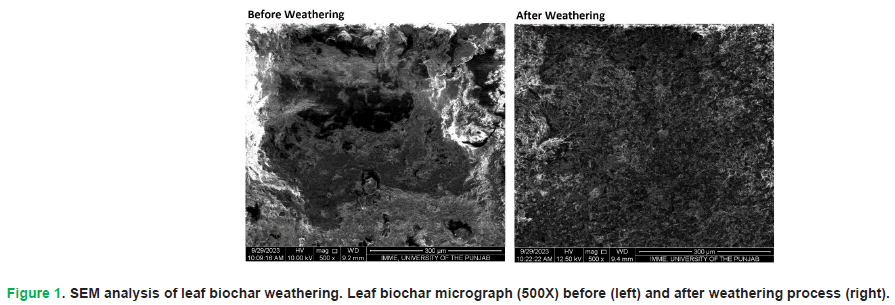
Figure 1: SEM analysis of leaf biochar weathering. Leaf biochar micrograph (500X) before (left) and after weathering process (right).
In Fig. 2, a similar analysis of stem-derived biochar weathering has been documented, and it indicates the impact of weathering on stem-derived biochar. Before the weathering, the stem-derived biochar exhibited a preservation of the anatomical structures of stem. However, as the ageing processing the soil progressed over time, these structures began to disintegrate.
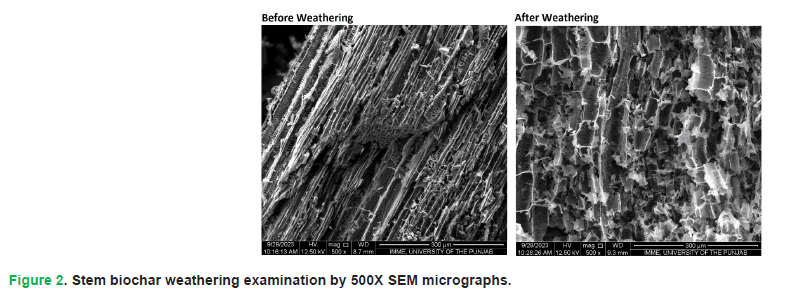
Figure 2: Stem biochar weathering examination by 500X SEM micrographs.
During the weathering process, stem biochar retained carbon up to 62%. This suggested that the efficient carbonization in stem biochar with a substantial amount of carbon in a stable form makes it less prone to weathering in soil. This property may be attributed to the lignin-rich structures of vascular bundles, which form a relatively stable carbon matrix. In contrast, leaves contain lower levels of lignin and during pyrolysis, leaves produced less stable organic compounds that retained only 37% carbon after six months of weathering. This phenomenon indicates the role of the initial feedstock in determining the stability of biochar in the soil environment.
Before ageing, the leaf biochar sample exhibited the elemental composition of Al at 4.6%, C at 55.13%, Mg at 2.63%, and O at 38.96%. After ageing in soil, the composition changed with carbon loss and the emergence of new elements, such as Fe, K, Mg, Na, O, and Si. Similarly, before ageing, the stem biochar sample had a composition of C (77.88%), Ca(0.965%), Mg (0.42%), and O (20.73%). After ageing, the stem biochar displayed reduced carbon content along with the appearance of other elements like Ca, Mg, Mo, O, and Si.
The analysis of leaf biochar weathering shows that carbon experienced a significant decrease of 18%, suggesting substantial dissolution, degradation, or transformation of carbon compounds within the biochar during the weathering process. The emergence of Fe and Si (4.86 and 4.9 %, respectively) demonstrated a biochar interaction with soil and possibly the formation of mineral-rich, micro-agglomerated layers that often form with the ageing of biochar. Similarly, potassium and sodium exhibited minor increases of 0.47 and 1.75%, respectively. Magnesium experienced a slight decrease of 1.19%, indicating a minor reduction. The most noteworthy change was observed in oxygen, with an increase of 6.82%, suggesting possible redox reactions.Fig. 3 shows the change in the elemental composition of leaf biochar and stem biochar.
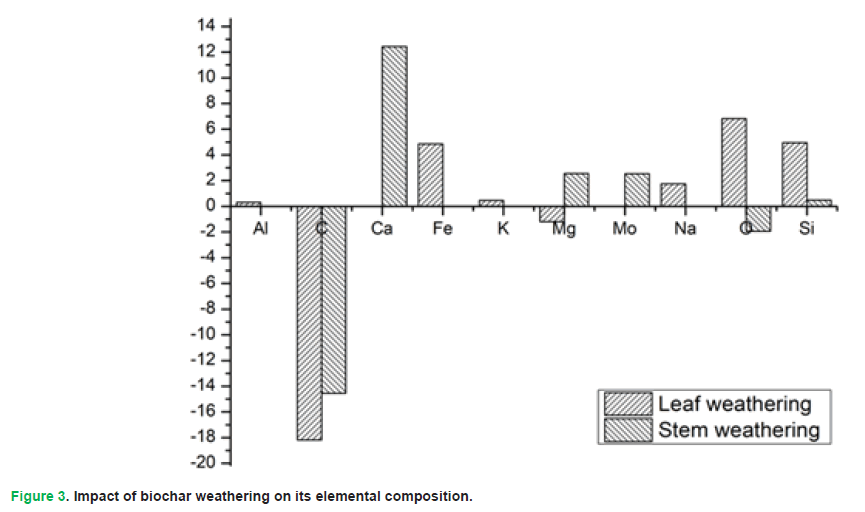
Figure 3: Impact of biochar weathering on its elemental composition.
Graph illustrates the % changes in elemental composition (mean values of duplicate EDS data) in leaf and stem biochar samples as a result of weathering. There are no bars for some elements, indicating no observable change.
Impact of biochar on plant growth and stress mitigation
This pot experiment was conducted from February 10, 2022, to April 20, 2022. It involved cultivating plants with four types of amendments: “soil (S)” (plain soil with no amendment), “SCom” (soil with 20% compost without biochar), “SCom+5B” (soil with 20% compost and 5% biochar), and “SCom+10B” (soil with 20% compost and 10% biochar). Plants were exposed to drought followed by investigation of impact of biochar-based soil amendments on plant biomass.
Here we noted that (Tab. 1) in the absence of any stress, plants in “soil (S)” treatment showed minimum biomass (2.4 g) and exhibited 31% biomass as compared to the “Scom” control (7.7 g). However, the addition of 5 and 10% biochar increases plant biomass up to 9.9 g and 8.2 g respectively which corresponds to 23 and 6% increase in biomass as compared to the control. Drought stressed plants showed reduced biomass as compared to unstressed plants. Soil (S) treatment under stress showed minimum biomass (1.9 g) that is about 48% of the control Scom (3.9 g). Addition of 5% biochar significantly added plant biomass by 58% (6.2 g-3.9 g=2.3 g) as compared to Scom with drought stress. Addition of 10% biochar increased plant biomass by 35.8% as compared to Scom control (Fig. 4).
| Column1 | Mean biomass (g) of control plants | Mean biomass (g) of drought plants | % Decrease in biomass due to drought | Mean biomass of salinity stressed plants | % Decrease in biomass due to salinity |
|---|---|---|---|---|---|
| Soil (S) | 2.4 | 1.9 | -22.1 | 2.1 | -13 |
| SCom | 7.7 | 3.9 | -50 | 6.5 | -15.2 |
| SCom+5B | 9.5 | 6.2 | -35.1 | 7.4 | -22.1 |
| SCom+10B | 8.2 | 5.3 | -35.7 | 6.9 | -16.1 |
Note: Comparison of tomato plant biomass under drought and salinity stress in 0% (SCom), 5% (SCom+5B), 10% (SCom+10B ) Biochar and plain soil (S) is given along the length of column. Impact of stress on plant biomass within the same soil condition is given horizontally
Table 1. Impact of biochar in drought stress mitigation.
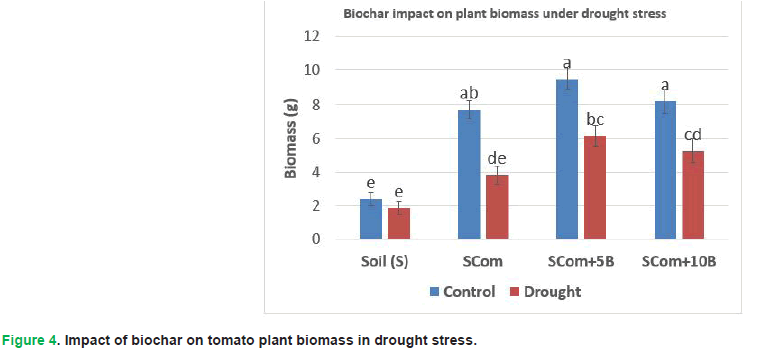
Figure 4: Impact of biochar on tomato plant biomass in drought stress.
Plants were grown in plain soil (S), soil with 20% compost (Scom), 5 and 10% biochar amendments [(Scom+5B), (Scom+10B)] under drought (orange bars) and normal condition (blue bars).
While investigating the biochar potential in mitigating the salinity stress, we used the similar four soil treatments: “soil (S)”, “Scom”, “Scom+5B”, and “Scom+10B”. Salinity stress negatively impacted the plant growth; however, this impact was variable in different soil amendments (Fig. 5). Salt stressed plants in “Soil (S)” showed only 32% of the biomass as compared to the plants with compost (Scom). Addition of 5 and 10% biochar (Scom+5B, Scom+10B) showed 13 and 6% more biomass as compared to control (Scom) that showed 6.5 g biomass. Under salinity stress, the “soil (S)” treatment displayed a 13% decrease in plant biomass in comparison to the unstressed counterpart. In the “Scom” 15.2% of plant biomass was reduced due to stress as compared to unstressed control. The inclusion of 5% and 10% biochar in the soil compost mix decreased plant biomass up to 22.1% and 16.1%, respectively as compared to the unstressed counterparts (Tab. 1). However, among all salt-stressed plants, the highest biomass was shown by 5% biochar (Scom+5B) and showed 13.8% more biomass (i.e. 7.4 g-6.5 g=0.9 g) as compared to 0% biochar control (Scom) under salinity condition.
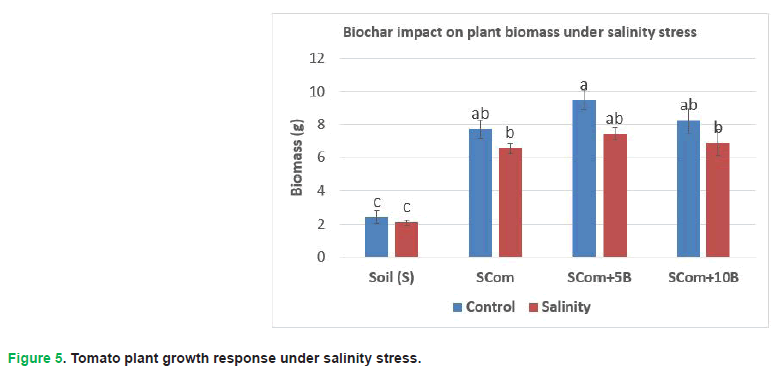
Figure 5: Tomato plant growth response under salinity stress.
Plants biomass under saline (orange bars) and unstress condition (blue bars) in unamended soil (S), soil-compost mix (SCom), 5% (Scom+5B), and 10% (Scom+10B) biochar-based soil amendments. Error bars indicate standard error of mean and small letters of bars show any significant difference according to Tuckey’s HSD test.
These observations show the potential of biochar in ameliorating the adverse effects of salinity stress on plant biomass. It is worth noting that all differences between the unstressed and stressed groups within the same soil mix/amendments were found to be statistically non-significant.
Discussion
Conventional agricultural practices involve the use of chemical fertilizers that contribute extensively to climate change through greenhouse gas emissions (Sharma and Singhvi, 2017). Biochar provides an alternative option (Lehmann, et al. 2021) that has shown promise in supporting plant growth and reducing biotic and abiotic stress in sustainable way (Joseph, et al. 2021).
Pyrolysis conditions should be optimized based on the intended application, as they significantly impact biochar properties and potential agricultural uses (Huang et al., 2021). Biochar elemental composition analysis after weathering shows 5% silicon in leaf biochar, which is likely to have an environmental origin rather than the original plant. Silicon has a role in enhancing resistance against biotic (Sakr, 2016) and abiotic stresses (Ma and Takahashi, 2002, Artyszak, 2018, Munir, et al. 2024) and can activate the expression of genes associated with stress tolerance (Balakhnina and Borkowska, 2013). The observed improvements in soil pH, Cation Exchange Capacity (CEC), and mineral contents show the impact of biochar in modifying soil chemistry (DeLuca, et al. 2015).
The increase in soil alkalinity can be attributed to biochar, this impact is expected to be more pronounced in acidic soil (Ippolito, et al. 2020). Presence of phosphorus and potassium in biochar indicates its role in plant nutrition and can be used as alternative to chemical fertilizers (Lustosa Filho, et al. 2020). An increase in phosphorus concentration in soil with increasing biochar concentrations is aligned with previous studies and showed the release of soluble phosphorus into the soil (Dordas, et al. 2008).
The increase in dry mass at 5% biochar concentration in unstressed plants indicates a potential involvement of enhanced photosynthetic activity due to improved soil nutrient levels (He, et al. 2020). This observation emphasizes the need for careful optimization of biochar application for agricultural practices. Accumulation of various polycyclic aromatic hydrocarbons instigates several biochemical reactions in the soil, which may negatively impact plant growth and beneficial microbial activity (Qadeer, et al. 2017).
The addition of 5% green waste biochar to the potting mix effectively alleviated drought and salinity stress in tomato plants, resulting in a significant increase in biomass by up to 58.8% under drought stress and a non-significant increase of 13.8% under salinity stress compared to plants without biochar. Biochar has been reported to effectively mitigate drought and salinity stress in several plant species (Wu, et al. 2023, Bano, et al. 2023). During drought and salinity, there is an increased production of Reactive Oxygen Species (ROS) that leads to physiological stress and limits plant growth and yield (Vijayaraghavareddy, et al. 2022, Iqbal and Munir, 2024). Biochar ameliorates the harshness of stress by improving soil texture, water use efficiency, nutrient homeostasis and reducing oxidative stress (Wu, et al. 2023).
The results in this study suggest promising benefits of biochar application in mitigating drought stress and improving plant growth, further research is important to document its long-term effects on soil health, plant productivity, and ecosystem sustainability. Careful consideration of biochar application rates and soil conditions is essential to maximize its efficacy and minimize any potential negative consequences.
Conclusion
In conclusion, this study demonstrated the impact of biochar on physiochemical parameters of soil, thereby improving plant growth, under both normal and stressed conditions. Biochar application considerably enhanced tomato plant biomass under drought and saline stress. While biochar has a remarkable half-life spanning hundreds of years, its stability depends upon the nature of the feedstock. Our investigation revealed that biochar derived from different plant tissues exhibits varying degrees of stability, with stem biochar demonstrating higher stability and carbon sequestration potential compared to leaf biochar. Therefore, comprehensive periodic studies are essential for elucidating the benefits and challenges associated with biochar application in sustainable agronomy. By enhancing our understanding of biochar’s long-term efficacy, we can not only improve its market value but also contribute to the sustainable agricultural practices.
Acknowledgements
The work was supported by the research grant of University of the Punjab.
References
- Akhtar SS, Li G, Andersen MN, Liu F. (2014). Biochar enhances yield and quality of tomato under reduced irrigation. Agric Water Manag. 138:37-44.
- Artyszak A. (2018). Effect of silicon fertilization on crop yield quantity and quality-A literature review in Europe. Plants (Basel). 7:54.
[Crossref] [Google Scholar] [PubMed]
- Balakhnina T, Borkowska A. (2013). Effects of silicon on plant resistance to environmental stresses. Int Agrophys. 27:225-232.
- Bano S, Tahira SA, ur Rehman S, Umbreen S, Younas S, Tahir S, Ibrahim M, Ghani SA. (2023). Assessment of morphoanatomical modifications in Cucurbita pepo L. in response to combined drought and nickel stress. Adv Life Sci. 9:483-489.
- Bina F, Bostani A. (2017). Effect of Salinity (NaCl) stress on germination and early seedling growth of three medicinal plant species. Adv Life Sci. 4:77-83.
- Blanco-Canqui H. (2017). Biochar and soil physical properties. Soil Sci Soc Am J. 81:687-711.
- DeLuca TH, Gundale MJ, MacKenzie MD, Jones DL. (2015). Biochar effects on soil nutrient transformations. Biochar for environmental management: Routledge.
- Dordas CA, Lithourgidis AS, Matsi T, Barbayiannis N. (2008). Application of liquid cattle manure and inorganic fertilizers affect dry matter, nitrogen accumulation, and partitioning in maize. Nutr Cycl Agroecosys. 80:283-296.
- EA EAG. (2017). Operating instructions vario MACRO cube CHNOS Elemental Analyzer. Langenselbold, Germany: Elementar Analysensysteme GmbH.
- Elad Y, Cytryn E, Harel YM, Lew B, Graber ER. (2011). The biochar effect: plant resistance to biotic stresses. Phytopathol Mediterr. 50:335-349.
- FAOSTAT. (2023). Food and agriculture organization of the United Nations. Statistical database.
- Irfan M, Mirara F. (2024). Biochar application in improving soil health and sustainability. Bull Biol All Sci Res. 2024:81.
- Gul S, Whalen JK, Thomas BW, Sachdeva V, Deng H. (2015). Physico-chemical properties and microbial responses in biochar-amended soils: Mechanisms and future directions. Agric Ecosyst Environ. 206:46-59.
- He Y, Yao Y, Ji Y, Deng J, Zhou G, Liu R, Shao J, Zhou L, Li N, Zhou X. (2020). Biochar amendment boosts photosynthesis and biomass in C3 but not C4 plants: A global synthesis. GCB Bioenergy. 12:605-617.
[Crossref]
- Huang H, Reddy NG, Huang X, Chen P, Wang P, Zhang Y, Huang Y, Lin P, Garg A. (2021). Effects of pyrolysis temperature, feedstock type and compaction on water retention of biochar amended soil. Sci Rep. 11:7419.
[Crossref] [Google Scholar] [PubMed]
- Husson O, Audebert A, Benada J, Soglonou B, Tano F, Dieng I, Bousset L, Sarthou JP, Joseph S, Menozzi P. (2018). Leaf Eh and pH: A novel indicator of plant stress. Spatial, temporal and genotypic variability in rice (Oryza sativa L.). Agron. 8:209.
- Ippolito JA, Cui L, Kammann C, Wrage-Mönnig N, Estavillo JM, Fuertes-Mendizabal T, Cayuela ML, Sigua G, Novak J, Spokas K. (2020). Feedstock choice, pyrolysis temperature and type influence biochar characteristics: A comprehensive meta-data analysis review. Biochar. 2:421-438.
- Iqbal Z, Munir M. (2024). Multifaceted natural drought response mechanisms in three elite date palm cultivars uncovered by expressed sequence tags analysis. Sci Rep. 14:23186.
[Crossref] [Google Scholar] [PubMed]
- Joseph S, Cowie AL, Van Zwieten L, Bolan N, Budai A, Buss W, Cayuela ML, Graber ER, Ippolito JA, Kuzyakov Y. (2021). How biochar works, and when it doesn't: A review of mechanisms controlling soil and plant responses to biochar. Gcb Bioenergy. 13:1731-1764.
- Lehmann J, Cowie A, Masiello CA, Kammann C, Woolf D, Amonette JE, Cayuela ML, Camps-Arbestain M, Whitman T. (2021). Biochar in climate change mitigation. Nat Geosci. 14:883-892.
- Li X, Wang T, Chang SX, Jiang X, Song Y. (2020). Biochar increases soil microbial biomass but has variable effects on microbial diversity: A meta-analysis. Sci Total Environ. 749:141593.
[Crossref] [Google Scholar] [PubMed]
- Liu WJ, Jiang H, Yu HQ. (2015). Development of biochar-based functional materials: Toward a sustainable platform carbon material. Chem Rev. 115: 12251-12285.
[Crossref] [Google Scholar] [PubMed]
- Lustosa Filho JF, da Silva Carneiro JS, Barbosa CF, de Lima KP, do Amaral Leite A, Melo LCA. (2020). Aging of biochar-based fertilizers in soil: effects on phosphorus pools and availability to Urochloa brizantha grass. Sci Total Environ. 709:136028.
[Crossref] [Google Scholar] [PubMed]
- Ma JF, Takahashi E. (2002). Soil, fertilizer, and plant silicon research in Japan. Elsevier.
- Munir M, Iqbal Z, Alqahtani NK. (2024). Biochar from different feedstocks as a sustainable approach to alleviate water deficit effects on zucchini. Pak. J. Bot. 56:2165-2178.
- Olsen SR. (1954). Estimation of available phosphorus in soils by extraction with sodium bicarbonate. US Dep Agric
- Osmolovskaya N, Shumilina J, Kim A, Didio A, Grishina T, Bilova T, Keltsieva OA, Zhukov V, Tikhonovich I, Tarakhovskaya E, Frolov A. (2018). Methodology of drought stress research: Experimental setup and physiological characterization. Int J Mol Sci. 19:4089.
[Crossref] [Google Scholar] [PubMed]
- Qadeer S, Anjum M, Khalid A, Waqas M, Batool A, Mahmood T. (2017). A dialogue on perspectives of biochar applications and its environmental risks. Water Air Soil Pollut. 228:281.
- Rajkovich S, Enders A, Hanley K, Hyland C, Zimmerman AR, Lehmann J. (2012). Corn growth and nitrogen nutrition after additions of biochars with varying properties to a temperate soil. Biol Fert Soils. 48:271-284.
- Rawat J, Saxena J, Sanwal P. (2019). Biochar: a sustainable approach for improving plant growth and soil properties. InBiochar258-an imperative amendment for soil and the environment.
- Richards LA. (1968). Diagnosis and improvement of saline and alkali soils. Agriculture Handbook. 60:210-220.
- Robb S, Joseph S, Abdul Aziz A, Dargusch P, Tisdell C. (2020). Biochar's cost constraints are overcome in smallâscale farming on tropical soils in lowerâincome countries. Land Degrad. Dev. 31:1713-1726.
- Rosada I, Amran FD, Sirajuddin SN. (2024). Enhancing Indigenous Knowledge to Enhance Food Security in Rice Field Agroecosystems of Pinrang Regency, South Sulawesi Province, Indonesia. Adv Life Sci. 11:84-91.
- Sakr N. (2016). The role of silicon (Si) in increasing plant resistance against fungal diseases. Hellen. Plant Prot. J. 9: 1-15.
- Sharma N, Singhvi R. (2017). Effects of chemical fertilizers and pesticides on human health and environment: a review. Int J Agric Environ Biotechnol. 10:675-680.
- Shrivastava P, Kumar R. (2014). Soil salinity: A serious environmental issue and plant growth promoting bacteria as one of the tools for its alleviation. Saudi J Biol Sci. 22:123.
[Crossref] [Google Scholar] [PubMed]
- Solaiman ZM, Blackwell P, Abbott LK, Storer P. (2010). Direct and residual effect of biochar application on mycorrhizal root colonisation, growth and nutrition of wheat. Soil Res. 48:546-554.
- Tamreihao K, Khunjamayum R, Shingmuan H, Chanu W.P, Kshetri P, Singh TS, Umakanta N, Thirugnanavel A, Sharma SK, Roy SS. (2023). Alleviation of drought stress and amelioration of tomato plant growth by bacterial inoculants for mitigating climate change. in bioinoculants: Biological option for mitigating global climate change. Singapore: Springer Nature Singapore. 201-215
- Vijayaraghavareddy P, Lekshmy SV, Struik PC, Makarla U, Yin X, Sreeman S. (2022). Production and scavenging of reactive oxygen species confer to differential sensitivity of rice and wheat to drought stress. Crop Environ. 1:15-23.
- Viuda-Martos M, Sanchez-Zapata E, Sayas-Barberá E, Sendra E, Pérez-Álvarez JA, Fernández-López J. (2014). Tomato and tomato byproducts. Human health benefits of lycopene and its application to meat products: a review. Crit Rev Food Sci Nutr. 54:1032-1049.
[Crossref] [Google Scholar] [PubMed]
- Walkley A. (1947). A critical examination of a rapid method for determining organic carbon in soils-effect of variations in digestion conditions and of inorganic soil constituents. Soil Sci. 63:251-264.
- Wang L, Deng J, Yang X, Hou R, Hou D. (2023). Role of biochar toward carbon neutrality. Carbon Res. 2:2.
- Wu Y, Wang X, Zhang L, Zheng Y, Liu X, Zhang Y. (2023). The critical role of biochar to mitigate the adverse impacts of drought and salinity stress in plants. Front Plant Sci. 14:1163451.
[Crossref] [Google Scholar] [PubMed]
- Zhang X, Lei L, Lai J, Zhao H, Song W. (2018). Effects of drought stress and water recovery on physiological responses and gene expression in maize seedlings. BMC Plant Biology. 18:68.
[Crossref] [Google Scholar] [PubMed]